
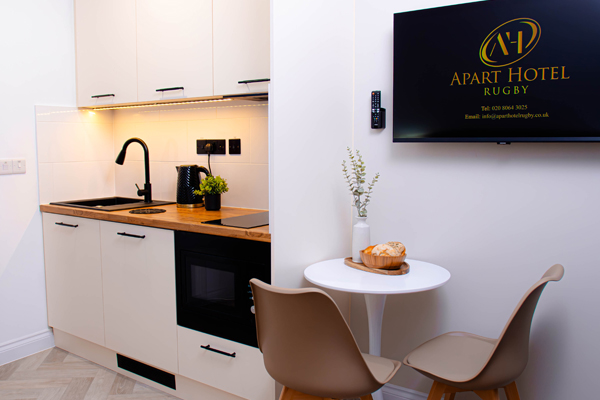
Self-catering accommodation means you stay somewhere with the facilities to prepare your own food—so you can eat on your schedule rather than relying on restaurants, hotel breakfasts, or takeaway for every meal.
In practice, self-catering can range from “light meal prep” to a fully equipped kitchenette or kitchen where you can cook properly.
If you’re deciding whether self-catering is right for you, this guide breaks down what it typically includes, the real pros and cons, and how to choose the right setup for your trip.
If you’re looking specifically for self-catering in Rugby town centre, see our main page:
Self-Catering Accommodation in Rugby.
Book now | See rooms | Policies
Self-catering definition (simple)
Self-catering is accommodation where you can store food and prepare meals yourself.
Instead of being dependent on hotel meal times or local restaurants, you have at least the basic essentials to eat in.
- Minimum expectation: fridge + kettle + basic items for snacks/drinks
- Typical expectation: a kitchenette with cooking and washing-up essentials
- Best-case setup: a fully equipped kitchen (stovetop/hob, oven, cookware, utensils)
What’s usually included in self-catering accommodation?
The best way to avoid disappointment is to check the exact room listing before booking.
That said, here’s what self-catering most commonly includes:
Food storage
- Refrigerator (sometimes with freezer section)
- Basic food storage space
Cooking / meal prep
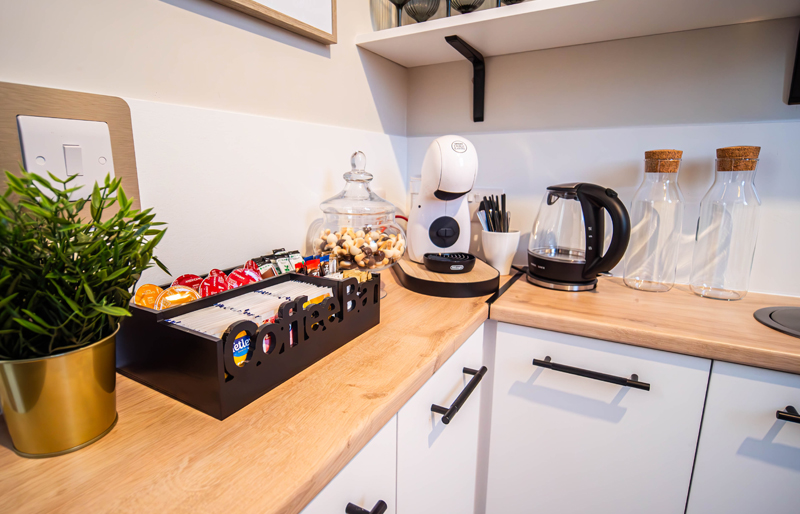
- Kettle (almost always)
- Microwave (common, especially in “light self-catering” rooms)
- Stovetop/hob (for proper cooking)
- Oven (often only in “fully equipped kitchen” setups)
Kitchenware and dining essentials
- Cookware (pans/pots) and basic utensils
- Plates/bowls/cutlery
- Glasses/mugs
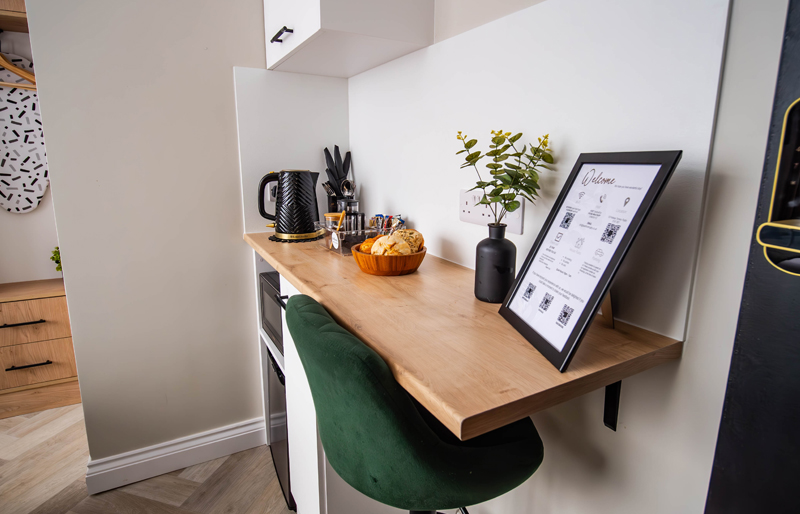
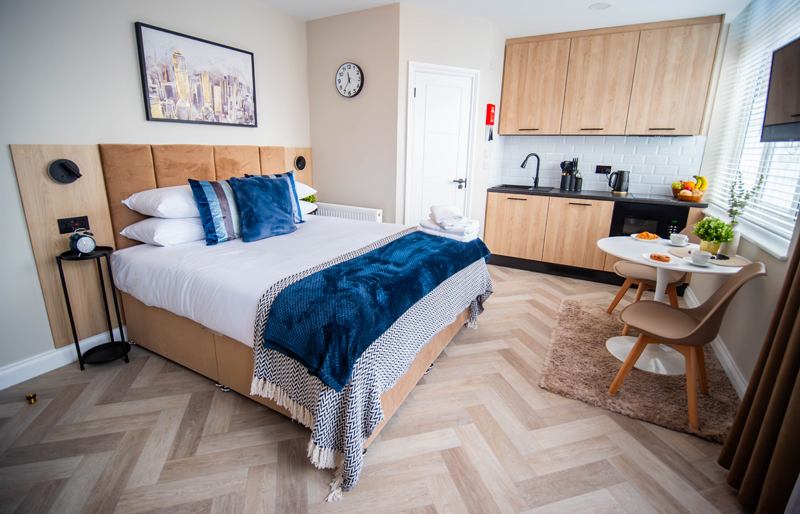
If you’re booking Apart Hotel Rugby, many room types include private kitchenette facilities (stovetop, refrigerator, kitchenware, and in several room types an oven).
You can confirm what’s included for each room here: Our Rooms.
Why choose self-catering? (the real benefits)
1) Freedom and routine
The biggest advantage is control. You can eat earlier or later, prep a quick breakfast, and keep a routine that fits your day.
This matters a lot on work trips and longer stays.
2) Better value on longer stays
If you stay for 3+ nights, self-catering often saves money. Even one “eat in” meal per day can reduce travel costs significantly compared to restaurants every day.
3) Health and dietary control
If you have specific dietary needs or simply feel better eating simple home-style meals, self-catering is usually the easiest way to stay consistent while travelling.
4) Comfortable for long stays (especially with laundry)
Self-catering shines on weekly stays when combined with practical facilities like laundry.
At Apart Hotel Rugby, guests have access to a shared laundry room and a separate drying room—useful if you’re staying long enough to need a “real life” routine.

Self-catering downsides (and how to avoid them)
1) Not all “self-catering” is equal
Some listings call themselves self-catering when they only offer a microwave and a mini fridge.
If you want real cooking, always look for a stovetop/hob and kitchenware.
2) You may need to plan groceries
Self-catering is easiest when you do a simple grocery shop early in the stay.
For short stays, you can keep it minimal: breakfast basics + snacks + one easy meal option.
3) Small kitchens need simple meals
Even with a kitchenette, the smartest approach is to cook simple meals:
pasta, rice, eggs, salads, or “assemble meals” that don’t require many pots and pans.
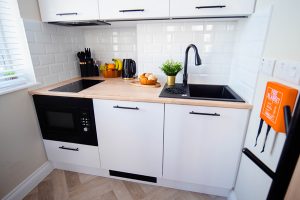
Who is self-catering best for?
Business travellers
If your workday ends late, self-catering means you can still eat well without searching for restaurants.
It also saves time in the morning: coffee + breakfast in your own space.
Contractors and weekly stays
For longer stays, self-catering is often the difference between feeling “stuck in a hotel room” and feeling like you have a base.
Add parking and laundry and the stay becomes much more practical.
Relocation stays
If you’re between homes, self-catering helps you live normally while you sort out the bigger move.
Families and couples on a short break
Even on a weekend trip, having a kitchenette makes mornings easier and gives you flexibility if plans change.
How to book self-catering accommodation without guessing
- Check the cooking setup: look for a stovetop/hob if you want real cooking
- Confirm kitchenware: cookware + cutlery + plates are key
- Check check-in rules: self check-in helps if you arrive late
- Think about laundry: important for 5+ nights
- Parking: if you drive, free on-site parking saves stress and cost
If you want self-catering accommodation in Rugby town centre with free parking, self check-in and laundry access, see:
Self-Catering Accommodation in Rugby.
FAQ
What does self-catering accommodation mean?
It means you can store food and prepare your own meals, usually with a kitchenette or kitchen facilities in the accommodation.
Does self-catering always include a full kitchen?
No. Some places only offer light meal prep (microwave + fridge). For full cooking, look for a stovetop/hob and kitchenware.
Is self-catering good for long stays?
Yes. It’s often the most comfortable option for weekly stays because it supports a normal routine and can reduce meal costs.
What should I check before booking self-catering accommodation?
Confirm cooking facilities, fridge space, kitchenware, check-in rules, parking (if driving), and laundry if you’re staying longer.
Do Apart Hotel Rugby rooms support self-catering?
Yes. Many room types include private kitchenette facilities. Check the rooms page for the exact setup for your chosen room type.





 English
  Polish
  Spanish
  Portuguese
  Romanian
  Bulgarian
  Dutch
Dutch  German
  French



Leave A Comment